
Priya Tayde is a Public Policy Professional with a decade-long experience in the field of Ecological Restoration through participatory governance. She has served through conflict-ridden areas in India to strengthen democratic processes in Public Planning and Governance with a special focus on the development of Indigenous and Rural communities in India. She has worked extensively for the improvement of poverty elimination, rural infrastructure, livelihood, and land tenure programs and played an instrumental role to ensure Social & Gender inclusion, Sustainability, food, and livelihood security as well as human rights for marginalized and underprivileged communities in the National and Federal Rural Development Programs. She has served a key role in developing policy and Legal frameworks to ensure the traditional rights and access to Indigenous and forest-dwelling communities to their forest lands and resources. She has contributed to stirring the discussion on national forums regarding institutionalizing the role of indigenous communities in climate change action and acknowledging their traditional wisdom for ecological restoration. Currently, she is working with the United Nations (UNDP, India).
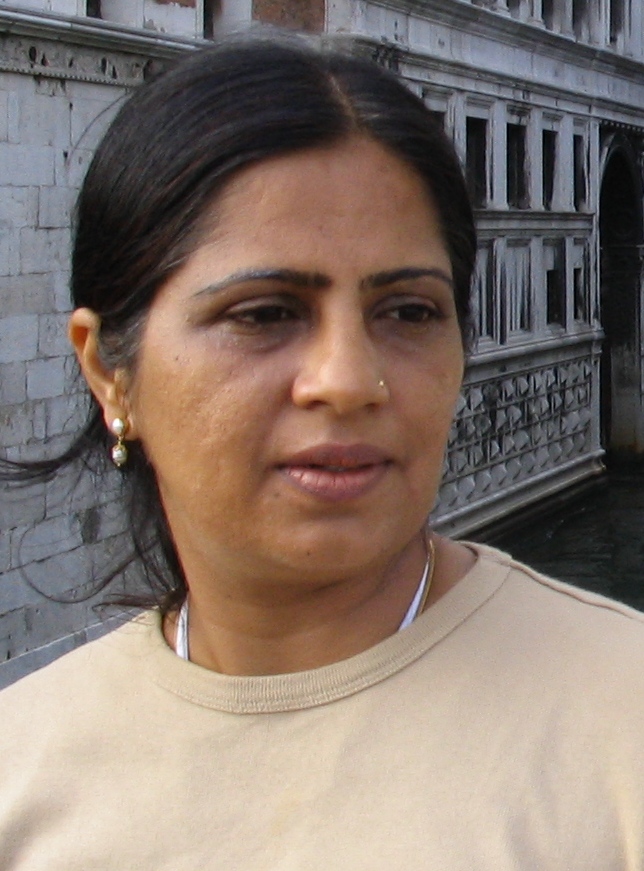
Dr. Roopa Sharma has more than 14 years years of teaching and writing experience. She has extensively contributed to citation search work and as a proofreader at Halsbury’s Laws of India and also worked at the Indian Law Institute and the Ideal Institute of Management and Technology, Delhi. Currently, she is a Visiting Associate Professor at IPEM Law Academy, Ghaziabad. She has extensively published in UGC-CARE listed journals, SAGE, and other prestigious law journals. Her book Human Rights and Bail finds pride in Michigan State University, Main Library, The University of South Africa, Pretoria, National Library of China, Beijing, Central Library Allama Iqbal University, Islamabad and has also been recommended for the syllabus book for MA Police Administration. She has written extensively on reservations for women in the parliament, transgenders of India, corporate environmental responsibility, etc.
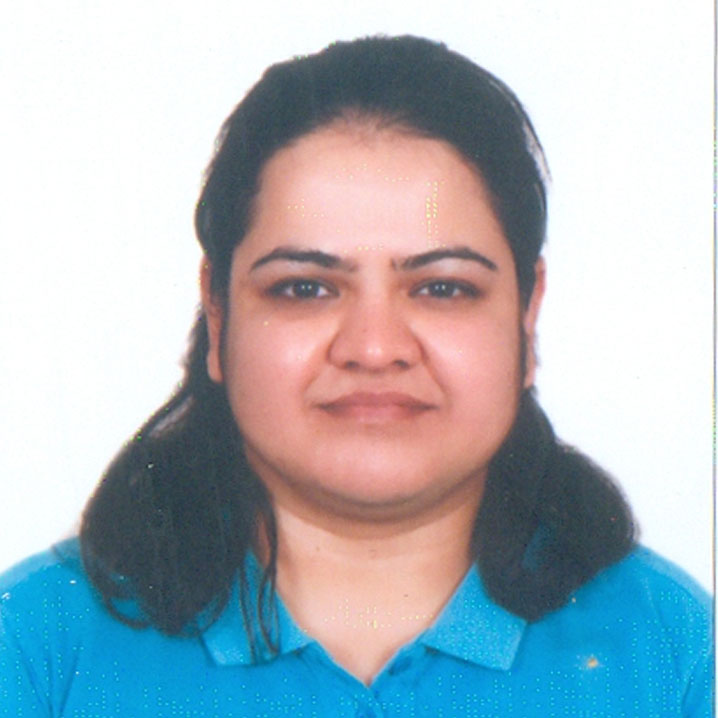
Manishika Miglani has covered a wide range of beats in her more than ten years as a journalist, including business, technology, health, telecom, politics, and international affairs. She is fascinated by global politics and the elements that influence the dynamics of countries around the world. Her extensive portfolio includes in-depth interviews with a number of well-known business leaders, legislators, diplomats, and other influential stakeholders.
She has previously worked as an editor for the Hindustan Times, The Sunday Guardian, Cyber Media, The Dollar Business, and The Diplomatist.

Akhila Kumaran identifies herself as a feminist researcher, based in Kerala, India. Currently, she is pursuing a Ph.D. from Tata Institute of Social Sciences -Mumbai and is working with the fishing communities to understand the political economy of coastal villages in Kerala. Her research interests include environmental economics, the political economy of development, and social justice. She has completed her Master’s degree in Applied Economics and M.Phil in Inclusive Development and Social Justice. In addition to academia, she loves scrolling Twitter and takes a keen interest in gardening.

Currently, an M.Phil. candidate at the Centre for Political Studies, School of Social Sciences, Jawaharlal Nehru University, New Delhi, Jangkhotingthang Mate’s research interests concern broad areas that examine the political and institutional determinants of economic development, state capacity, the effects of neoliberalism on the marginalized groups, corruption, and distributive politics. His M.Phil. thesis specifically examines the changing nature of corruption in India through the framework of the New Institutionalism, taking into account the institutional embeddedness, democratic politics, and its implication it has on a developing country like India. For his future research, he intends to explore the shifting governance discourse in the context of neoliberal experimentation in northeast India and its impact on the politics of development, hill-valley dynamics, identity politics in the region. He has not only cleared the National Eligibility Test conducted by the University Grants Commission in 2018 but has also been awarded the prestigious Nirman Foundation Fellowship (Lord Bikhu Parekh Endowment), Jawaharlal Nehru University (2017-2019).

Tridivesh Singh Maini is presently a New-Delhi based Policy Analyst. Additionally, he is also working as a Visiting Professor at OP Jindal School of International Affairs, Sonepat, Haryana. He graduated with honours from the University of Sheffield with a bachelor’s degree in politics and a distinction for his dissertation. He graduated from American University’s School of International Service in Washington, DC, with a Master’s degree. Between November 2013 to March 2014, he served as a Public Policy Scholar at the Hindu Centre for Public Policy in Chennai. He has also been a former SAV Visiting Fellow (Winter 2016), Asia Society India-Pakistan Regional Young Leaders Initiative (IPRYLI) Fellow from 2013-14. The importance of state governments in Indian foreign policy, the India-Pakistan-China triangle, and the changing nature of Indian federalism are among his research interests. Mr. Maini has been a contributor to Modern Diplomacy, The Geopolitics, South Asia Monitor, and the South Asia LSE Blog, among other publications. He formerly worked as a Senior Staff Writer for the Indian Express in New Delhi (2007-08).

Dr. Srija Basu has pursued her doctoral research on climate change, gender, and policy as a comparative assessment between South Asia (India) and Africa, Centre for African Studies, University of Mumbai, India. With a Masters in Gender Studies from SOAS, UK, she is also on the advisory panel of the Ibadan Journal of Gender Studies, University of Ibadan, Nigeria. She is a member of weADAPT, a global collaborative platform on climate adaptation at the Stockholm Environment Institute, Oxford. She has worked on over 40 books as a senior book editor. She has recently engaged with a World Bank project supported by the Global Facility for Disaster Reduction and Recovery (GFDRR). She has engaged in international project collaborations such as joint research between a university in the UK and a research centre in India, and also on environmental and social impacts assessment and social protection policy and gender. Dr. Basu has published with the London School of Economics – South Asia Centre, and is working on a book on gender, climate change, and social protection in the global south countries, with a UK-based international research journal.
 Global Policy Consortium