AUTHOR: SAMAYALA SAMI
As the richest and most powerful country in the world, the USA through its unilateral trade partners and influence on the UN, has imposed sanctions on countries that promote terrorism and violate human rights. Balkans, Cuba, North Korea, Hong Kong, Belarus, Mali, Lebanon, Venezuela, Iran, Yemen, and Zimbabwe are a few countries/regions subjected to US Sanctions as of 2021.
Sanctions are not a recent concept. Since the 5th century BC, kingdoms and regions have imposed sanctions. Athens imposed sanctions known as Megarian Decrees during the Peloponnesian War, prohibiting Megarians from visiting the harbor and marketplace. Some sanctions are aimed at humanitarian missions, while others are part of a country’s foreign policy. However, they all operate in the form of trade barriers, travel prohibitions, and other restrictions. The efficiency of sanctions is disputed, and only a handful of them succeed in achieving their goals.
US Iran relations pre-sanctions: From ally to the axis of evil
Before the Iranian revolution in 1979, the United States was Iran’s major trade partner. Following Germany, which had a 19% share of Iran’s imports, the US had a 16 percent share in the imports. It was also the second-largest exporter to Iran before the 1979 revolution. In 1953, the British and American intelligence helped overthrow Iran’s then Prime Minister Mohammed Mossadeq. They restored a monarchy led by Shah Mohammad Reza Pahlavi which was friendly to the west and relied on the US to remain in power.
But the ties between the two countries worsened when a group of students abducted 52 American hostages from the US Embassy’s premises in Iran on November 4, 1979, and held them for 444 days. After the Iranian revolution, the attack on the US embassy in Teheran and the imprisonment of US diplomats and officials forced the US to impose an embargo on Iranian imports. Its allies were supposed to support the sanctions and boycott the Iranian commodities. They, however, backed down since the sanctions on oil imports were inefficient. While the US was still purchasing twenty percent of Iran’s oil and selling them to other nations, preventing its allies from doing the same didn’t make any sense. The other reason was the nature of oil as a commodity that presented a loophole in the US oil embargo on Iran. Oil being a fungible commodity could easily be exchanged with the oil of other nations.
The restrictions have progressed over 40 years, beginning with the prohibition of some Iranian government possessions or interests in property. In 1980, trade and travel between the United States and Iran were prohibited, and in 1984, the president issued executive orders forbidding any type of foreign assistance, borrowings, or defense support to Iran. Imports of Iranian commodities into the United States ceased in 1987. The Iran-Iraq Arms Nonproliferation Act of 1993 made any deal that assisted Iran or Iraq in obtaining nuclear weapons illegal. The export of goods, technologies, or services from the United States to Iran, including trade financing by US banks, was restricted on 6 May 1995. The US restrictions were strengthened in the mid-1990s with an investment ban and a sanction placed on any international company that invests more than $20 million in Iran’s energy sector per year. The bill issued on March 15, 1995, barred a U.S. citizen from making agreements for the funding, general administration, or monitoring of the exploration of petroleum resources in Iran or a region claimed by Iran. The Iran and Libya Sanctions Act, signed on August 5, 1996; and the mandate of August 19, 1997, defined the existing orders and reaffirmed that almost all trade and investment activity with Iran by U.S. people, regardless of location, were illegal.
During the early 2000s, there were several reports of Uranium enrichment activities that sparked worldwide concerns. The allegations prompted a series of sanctions on Iran by the United Nations, the European Union, and the US government. This was carried out to prevent Iran from obtaining nuclear-related items and to exert economic strain on the Iranian leadership. As Iran reactivated its enrichment program in the mid-2000s, transactions in nuclear-related technologies were banned by the United Nations Security Council. These sanctions continued to augment as the UK, US and Canada imposed sanctions. The United Kingdom prohibited its banking institutions from dealing with Iranian banks. The United States and Canada imposed restrictions on companies dealing with Iran’s energy sector. International financial firms were no longer allowed to execute oil deals with Iran’s central bank, which handles the majority of the country’s oil transactions. The EU ban on Iranian oil imports, which went into effect on July 1, 2012, was perhaps the most far-reaching ban. Iran’s oil exports have decreased by more than 30% as a result of the EU embargo.
Lifting the economic sanctions on Iran
After 9/11, President George W. Bush’s government started a back channel with Iran to assist in the defeat of the Taliban, which was a common enemy that had offered refuge to al-Qaeda militants in Afghanistan. The United States and Iran agreed on the Bonn Agreement which addressed the safe return of Afghan refugees in the wake of the US invasion of Afghanistan in 2001.
During the UN General Assembly in 1998, Madeleine Albright, the US Secretary of State met with the deputy foreign minister of Iran at the Six plus Two Talks. This meeting was marked as the highest interaction between Iran and the US since the Iranian revolution in 1979. Two years later, in April 2000, Albright recognized that the US was involved in deposing Mossadeq. She also added that past policies toward Iran were “regrettably stupid.” However, the US did not respond to the statements. Following this event, a few sanctions on Iran were withdrawn.
Another factor that contributed to the easing of sanctions was the mounting pressure from US firms to lift them. According to Ottaway and Morgan,1997, US oil firms fought hard against the regulations imposed and even former top government officials were lured into having a slice of the pie. With a quick inspection of some lobbyist groups, one could find former US government officials and academics collaborating with oil companies.
Were the sanctions effective?
The US embargo has damaged Iran’s socio-economic dynamics. Iran’s population health has suffered as a result of the economic sanctions. Self-harm death rates increased from 5.9 to 6.1 per 100,000 people between 2011 and 2014, according to the World Health Organization (WHO). Surprisingly, the following year after the sanctions were dropped, this percentage decreased to 5.9%. These patterns indicate a decline in the mental health of Iranians when faced with severe sanctions, followed by an improvement. However, in Iran’s Constitution, eradication of poverty and welfare and medical equity, are top priorities. Iran has greatly improved the standard of living of Iranians by shaping urban facilities such as providing electricity, safe water and sanitation, and universal free education. In 2011, more than 95% of Iranians had increased access to drinking water and sanitary facilities, and an 85% adult literacy rate was reported.
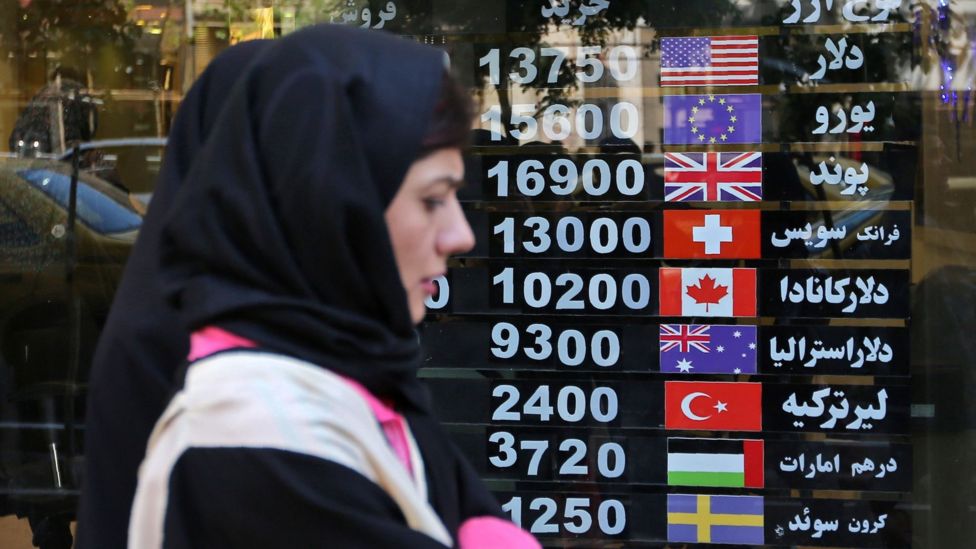
Iran’s financial difficulties forced it to accept undesirable oil contracts and compel it to borrow money at excessive interest rates. Following the announcement of the sanctions, the rial’s value plummeted. From its pre-sanction rate of 4,200 rials/dollar, the rial dropped by a 1/3 in 2 weeks to 7,500 rials/dollar. The sanctions resulted in a shortage of hard cash, compelling Iran to reduce its imports, resulting in increased domestic prices. The embargo also made it difficult for Iran to obtain foreign funds and made it impossible for it to repay its foreign debt on schedule. The economic losses for Iran are high, yet the impact on the American economy is small due to its size. Therefore, the sanctions were successful in putting financial constraints.
Jahangir Amuzegar(1997) says that the sanctions imposed by the US have failed to achieve the desired outcomes and also were unable to alter the Iranian regime. Its political influence has been negligible and the ruling government has not been met with any civil resentment. Hossein Askari et al. (2001) argue that Iran’s policies are still controversial, the sanctions could not change them, and that the US should lay down stringent economic sanctions.
In Vienna, the eighth round of talks intended at reviving Iran’s historic 2015 nuclear deal is ongoing, with Iran still seeking assurances that US sanctions will be withdrawn.
The Joint Comprehensive Plan of Action (JCPOA) talks are happening between Iran and the foreign powers who have signed on to the agreement. The United States, which withdrew from the agreement unilaterally in 2018, is taking part in the talks in a roundabout way. Iran’s president has stated that his government is “ready to any arrangement” provided the United States and other world powers are willing to lift sanctions.
*“The views expressed in the article are author’s personal and are not endorsed by the Global Policy Consortium (GPC) or assumed by their members”
 Global Policy Consortium
It was so informative for me and being your friend feel me proud ..
Hats off to Soha ji
LikeLike
This article has all the important points related to the issue. Well explained.
LikeLike
Enlightening
LikeLike
Nice 👍
LikeLike
Amazing article. Keep it up.👏👏
LikeLike
I recently learned a lot on this topic the issue is so multi-layered
LikeLike