AUTHOR: HIMA MISHRA
ANALYSING THE SIGNIFICANCE OF CLIMATE ADAPTATION: A CASE STUDY OF INDIA – Global Policy Consortium Podcasts
Indian realpolitik has often been understated by scholarship, and Indian strategic culture has been classified as anything between non-existent to idealist. However, India possesses a lineage of realpolitik thinking as a part of her strategic culture ingrained in the mindset of modern-day policymakers. From when it was feasible and necessary to remain non-aligned to escape the great power politics of the world and secure her internal political structure, to now, when a belligerent country asserts itself continually at her borders, Indian realpolitik has evolved. This article takes up a scholarly inquiry into whether India’s strategic culture is equipped to handle the challenges of changing world order.
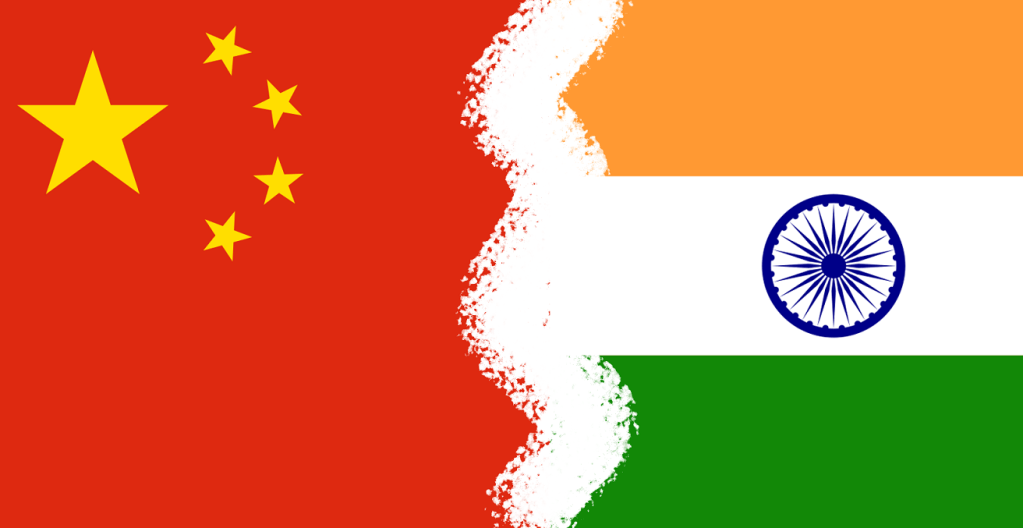
India is rising, but in China’s shadow, writes Rajagopalan. Scholars all over the world are waking up to China’s transformed role in the Asian region. On one hand, Beijing actively promotes good relations with New Delhi, and on the other, violates India’s territorial sovereignty through border incursions along the Himalayan region; simultaneously building ties with India’s neighbors in South Asia, including Pakistan. Such a two-pronged approach taken by China, combined with an asymmetry in the two countries’ economic and military capabilities, has caused a geopolitical imbalance in Asia. Owing to the asymmetry of capabilities, India needs a pragmatic approach towards China, the first step to which appears to be a deepening of ties with the United States, bilaterally, on international multilateral platforms, and in various spheres of foreign policy (Rajagopalan, 2017). One major strategic concept involved in this decision is realpolitik. Realpolitik, or political considerations based on practicalities rather than ideological decisions, has been imagined and reimagined in Indian strategic thought throughout history.
For a long, India has harbored a soft corner for China and Chinese civilization as it is an ancient civilization rich in culture, just like India. Historically, Indian and Chinese kingdoms have maintained friendly ties and encouraged cultural exchanges. Both the countries have been integral to the functioning of the Silk Road. This was the perspective that dominated India’s initial approach to China, according to Pandit Nehru’s strategic thought. Nehru, believing India and China to be close allies, defaulted in understanding that the Chinese Communist Party neither represented the great civilization nor respected the ancient ties between the two countries. China under Mao was defensive, under Deng it grew accepting of the outside world through economic reforms, and under the leadership of Hu Jintao and Jiang Zemin, China’s peaceful rise doctrine threw off any suspicions that the world might bear towards their intentions, writes the former Foreign Secretary of India, Vijay Gokhale, in The Long Game: How China Negotiates with India. However, in the current times, China plays a strong hand under Xi Jinping, who, Parthasarathy (2021) opines, is “determined to dwarf” the role and policies of all of China’s able leaders that preceded him.
India’s strategic culture often plays into the evil versus righteous narrative, and the notion of enmity finds its place in some of our key historical and strategic texts. India’s perception of China viz. her relations with the country has seen highs and lows. Drawing from Chanakya’s geographic assumption proposed in the Mandala Theory, China is India’s immediate neighbor in today’s day and age, and adding that to the recent events, can be considered as a “natural enemy” to build this strategic understanding.
According to Glenn (2018), different historical and cultural settings, and foreign policy challenges influence strategic culture, and with a shift in China’s position viz. India, perhaps a peek into India’s strategic realism is overdue. Arthashastra, written in Antiquity and considered as a major political and strategic doctrine by scholars across the world, lays the foundation for Indian strategic culture and the science of politics, writes Chaliand(1998) in Arthashastra: Traité politique et Militaire de l’Indeancienne. In the Arthashastra, Book VII Chapter I, Chanakya writes that if a king thinks, “that I am strong neither to harass my enemy’s works nor enough to defend my own against my enemy’s attack,” the king must seek help from a superior king to prevent deterioration, move towards stagnancy, and pass on to prioritizing progress for the country. Further, in Book VII Chapter II, Chanakya writes, “A king who is situated between two powerful kings shall seek protection from the stronger of the two; or from one of them on whom he can rely, (or may choose to make peace with both of them)” (Shamasastry, 1915). Here, the “king” is a symbolic representation of the State that acts within its national interests. With China, India sees a similar challenge, and the only “superior king” in today’s world order with the military and economic capabilities to challenge China in the US.
Therefore, New Delhi has adopted a mixed strategy for the China challenge with realpolitik at its heart. India’s “head, heart, and hand” approach includes accommodation, competition, and deterrence. For example, India and China are cooperating on the BRICS platform, including the Asian Infrastructure Investment Bank’s (AIIB) Sustainable Energy for Asia Strategy and Covid-19 infrastructure building. China’s increased role in regional development and the economies of the Global South push India towards accommodating her national interests with the country. At the regional level, India is pursuing competition with China by objecting to the China Pakistan Economic Corridor (CPEC) and China’s influence in South Asia and Africa through India’s generous Vaccine Maitri program. Finally, with bilateral issues such as border incursions, India is pursuing complete deterrence.
A risk to consider is that China perceives India as a secondary threat rather than a primary competitor, one that only becomes problematic for the Chinese State when it comes to locking horns with both US and India. Tracking the shift in the balance of power in Asia, India realistically cannot hope to avoid conflict with China. Instead, she must minimize conflict while addressing the power asymmetry. Therefore, India’s move towards building cooperation with the US and its close allies – Japan, and Australia – through the Quadrilateral Security Dialogue (Quad) is a careful strategic move showcasing Indian realpolitik, fundamental to Indian strategic culture.
*“The views expressed in the article are author’s personal and is not endorsed by the Global Policy Consortium (GPC) or assumed by their members”
 Global Policy Consortium