AUTHOR: ADITI SHETTY, Writer at GPC
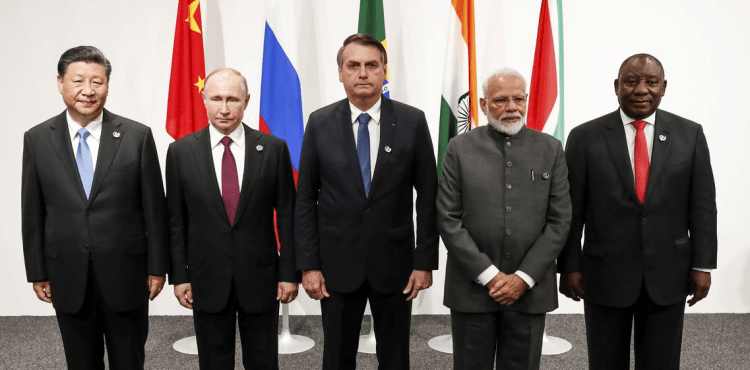
The BRICS (Brazil, Russia, India, China, and South Africa) grouping, a collection of developing political and economic powers, has been a significant factor in the global panorama. The pandemic has challenged numerous economies, global institutions, and the whole concept of multilateralism to the test, with the BRICS being no exception. BRICS was one of the first respondents to the outbreak, expressing its condolences. BRICS was one of the first organizations to respond to the pandemic, expressing sympathy, solidarity, and support for China, which had been heavily affected by COVID-19, and explicitly stating the need to strengthen scientific cooperation in combating infectious diseases and bolstering the pillar of public health. As early as February 2020, during the BRICS Sherpa meet, the BRICS had raised alarms about the COVID-19 pandemic.
The BRICS witnessed tensions among its member states that have harmed the organization’s functioning, such as cross-border violence between India and China, which only ended after eight months of talks with both sides disengaging soldiers, severing Sino-Indian ties. Even Brazil’s President Jair Bolsonaro’s preferences for the United States and criticism of China have been blamed for increasing conflict inside the organization, among other things. Moving forward, the BRICS will face hurdles in realizing their full potential. Despite the fact that it has been met with distrust since its inception, the BRICS has established itself as a formidable force against those who made an attempt to question its credibility.
THE ORIGIN
The BRICS grouping is accredited to Jim O’ Neill, who was then the Chief Economist at Goldman Sachs, a prestigious global financial bank. As he put it after the 9/11 attacks, “What 9/11 told me was that there was no way that globalization was going to be Americanisation in the future – nor should it be.”
The first BRIC summit, which included the four BRIC foreign ministers, was held seven years after Jim O’Neill published his papers on the BRICS in 2001. In May of the following year, the chiefs of state of the BRIC countries met in Russia. South Africa began the process of joining the grouping a year later and became an official member a year later.
The BRICS nations account for 42% of the global population and nearly 23% of global GDP; however, unlike other groupings such as ASEAN, which is geographically linked, or the G7, which brought together some of the world’s most developed countries, the BRICS’ homogeneity is unclear, and they are geographically dispersed. The economic gaps have added to the divisiveness, with China being the only country in the world to see economic growth by 2020, while others are still reeling from the pandemic’s aftermath, with worrying contractions, and the members’ far-flung locations have only hampered trade accords.
The international outcry against China for failing to alert the world about the fatal disease and for being unable to quickly contain the virus’s spread, resulting in Brazil, India, and South Africa becoming significant virus hotspots. Russia has also been severely damaged by the COVID-19 outbreak, which has exacerbated the country’s economic challenges as it battles European Union sanctions by the European Union and the United States as a result of its invasion of Crimea. It is clear that each country’s response to the pandemic and its aftermath has been unique.
BRICS AMIDST THE PANDEMIC
BRICS aims to put the tides of time and COVID-19 to the test in the midst of the global crisis. Brazil’s president, Jair Bolsonaro, has been condemned for his slow response and ineptitude, as the country is responsible for 11% of COVID-19-related deaths globally. China has been accused of being coy about the virus’s dangers, while India’s victory narrative over the virus has devolved into a deadly second wave, with WHO Director-General Tedros Adhanom Ghebreyesus issuing a warning to the country on May 14, 2021, “India remains hugely concerning, with several states continuing to see a worrying number of cases, hospitalizations, and deaths.” South Africa was the worst-affected economy on the continent; the six-week shutdown, while beneficial, had a negative impact on the working poor, who resorted to rioting as a result of various measures, such as the delivery of food packs and other help, failing to reach the intended recipients.
In troubled periods, the BRICS convened on multiple occasions in 2020, with over 150 activities and 25 ministerial-level meetings. As the BRICS nations’ economic gaps widened, the New Development Bank of the BRICS offered financial assistance. The New Development Bank, led by KV Kamath, determined in April 2020 at its Governors body meeting that China would receive $1 billion in loans, which would subsequently be distributed to other member countries. This action has set a precedent for a number of international organizations to begin providing much-needed financial assistance.
The BRICS countries actively collaborated with the WHO, Europe, and others to provide Human Aid and Disaster Relief (HADR). The BRICS Economic Partnership, which will run until 2025, is also aimed at reviving the economies of countries that have suffered greatly as a result of the pandemic. BRICS countries have formed collectives to support women in business, combat terrorism, and coordinate research efforts in the field of energy management, among other vital topics.
CONCLUSION
One of the most important contributions BRICS countries can make to help the global economy recover is to start rebuilding global value chains. Mutual investment and support to establish value chains across BRICS countries will help the global economy while also enhancing BRICS countries’ networks. BRICS countries may mobilize their combined 40 % of global population, $4 trillion in reserves, and share of over 17 % of global commerce by aggressively working to reintegrate production networks and boost the openness of international trade. Global value chains also have a significant impact on employment creation, which is critical for the recovery of the economy following the pandemic. It is imperative to note that the world of pandemics and post-pandemic presents both obstacles and chances for BRICS to emerge as a strong bloc. It may use its diversity to strengthen its position and make an influence on the world stage.
*“The views expressed in the article are author’s personal and is not endorsed by the Global Policy Consortium (GPC) or assumed by their members”
 Global Policy Consortium